How Retailers Achieve End-to-End Visibility of Refrigerated Freight
Blog Post CTA
Imagine shipping 40,000 pounds of frozen chicken to a supermarket. The truck gets there on time, but when the receiver pulls the temperature download, there is a three-hour gap in the data somewhere between Memphis and Little Rock. No one can say for sure that the cold chain held, so the entire load is rejected.
There may be nothing wrong with the
reefer shipment, but without proof that conditions stayed within required specifications throughout the entire transport process, the receiver has every right to turn the truck away. Unfortunately, because of poor end-to-end visibility and a gap in refrigerated freight tracking, this situation is not unusual.
This article showcases enhanced logistics tracking and end-to-end visibility in refrigerated transportation through integration with specialized providers, ensuring transparency and reliability.
Where Cold Chain Tracking Tends to Break Down
A shipper might put a GPS on the trailer and a data logger inside the load. But if those systems can’t talk to each other, or if the data isn’t available until after unloading, the information arrives too late to matter. With multi-stop LTL reefer routes, it is even worse. Every time the truck stops or the door is opened for a handoff, there is a chance that data is lost or unrecorded.
And then there is the problem of the wrong temperature. According to ORBCOMM, up to
32% of refrigerated cargo is loaded at the wrong temperature. This is often because the driver waits too long to leave after the produce has been on the dock. If no one notices it early, the problem persists throughout the trip.
What End-to-End Visibility Actually Looks Like
Having a GPS dot on a map is not the same as seeing a refrigerated shipment in real time.
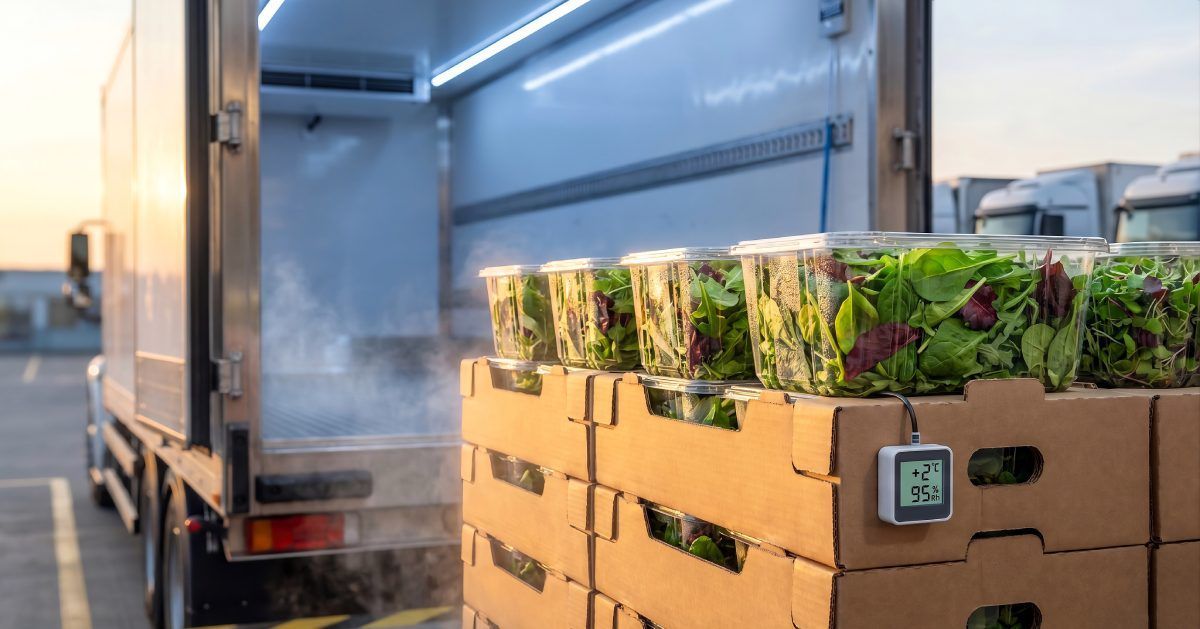
With end-to-end visibility, you can always see the shipment’s location and monitor the temperature in real time. This way, the shipper, carrier, and receiver have access to the same information at every step, from pickup to delivery.
If, for instance, the temperature goes outside the acceptable range, an automated alert is triggered. That means if something goes wrong while the load is in transit, all stakeholders are immediately aware.
How Better Refrigerated Freight Tracking Protects Shippers and Receivers
Consider a few scenarios that show what this looks like when it works:
1. Prompt Response
A reefer truck carrying dairy from a processor in the Midwest to a retail distribution center begins to warm after 200 miles. Within minutes, the monitoring system flags it. The carrier can send a technician to the next truck stop, where the unit is fixed before it goes out of spec. If it hadn’t been for that alert, the problem would have gone unnoticed until the receiver picked up the download at the dock.
2. Real-Time ETA Updates
Consider a multi-stop LTL reefer route. If the second delivery takes longer than planned due to a dock backup, the tracking system can automatically recalculate the ETAs for stops three and four — and the receiving warehouses can adjust their schedules before the driver calls. This way, there are no missed appointments and no detention charges.
3. Accurate Digital Reporting
Say a store’s food safety team is getting ready for an inspection. Instead of looking for paper logs and calling carriers for temperature records, they can get a single digital report that shows the entire journey of each shipment in question. That alone can save you days of going back and forth.
Why the Right Logistics Partner Makes the Difference
Most food manufacturers and stores can’t get this level of visibility on their own. They are shipping with different tracking systems on each leg and across many carriers and lanes. There is data out there, but putting it all together into a usable picture can be challenging. That’s why a 3PL that knows a lot about shipping temperature-sensitive goods matters.
A partner like
Entourage Freight Solutions, an expert in foodservice logistics, sees refrigerated freight tracking and end-to-end visibility as integral to managing freight, rather than just an extra feature. That means keeping an eye on the temperature at all times, sending alerts when something goes wrong, and having a team that knows what happens when a reefer load goes wrong. There is very little room for error when it comes to refrigerated freight. So
contact us today to see how we can help.