Capacity Tightens as Storm Shocks and Trade Slumps Take Hold
Blog Post CTA
A single signal rarely changes the freight market. What we are seeing now has more layers. A winter storm drove up rates for truckload spots. Tender rejections rose, and unlike in previous years, they are not declining as quickly. Meanwhile, major carriers are openly discussing capacity losses and greater pricing power. And at the same time, regulators are looking over what could be the biggest rail merger in North American history.
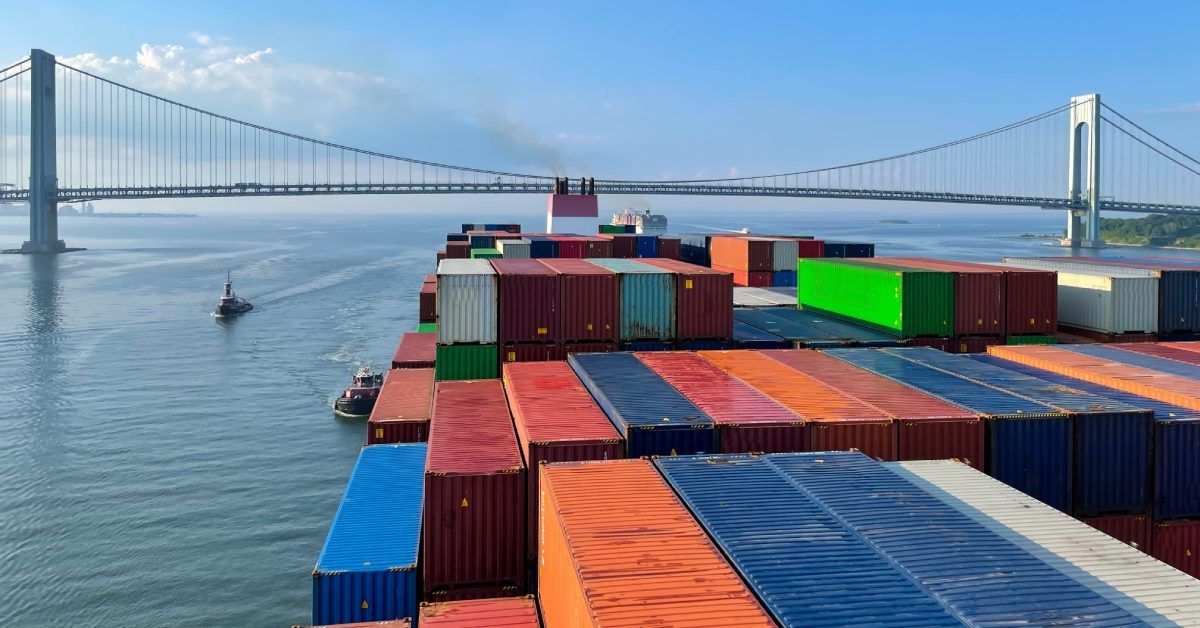
The Port of Los Angeles just had its lowest monthly cargo output in almost three years as exports to China have dropped. As rates get closer to break-even levels, ocean carriers are canceling a lot of sailings. But Southeast Asia is making up for some of the work.
All of these signals point to a changing freight market. Below is a breakdown of the changes shaping 2026 so far.
Winter Storm Exposes Thin Truck Capacity
A late-January winter storm sent an immediate shock through the U.S. truckload market. Spot load posts surged 40% week over week following the disruption, according to DAT. Dry van spot rates rose 11 cents, the largest seven-day gain in over three years, while temperature-controlled rates jumped 15 cents as shippers leaned on reefers for freeze protection.
The ice storms are comparable to the disruption caused in February 2021, but there is now “less latent capacity” and a smaller buffer in the system. The reaction was sharper than what followed major hurricanes in recent years. And the key question is whether this is a temporary weather-related strike or the start of something structural.
J.B. Hunt Signals Early Demand Strength
At a recent investor conference, J.B. Hunt executives described a market that is tighter than anticipated. CFO Brad Delco said demand is running slightly ahead of early January expectations, and tender rejections began climbing before Thanksgiving and have not followed the usual seasonal decline.
Management acknowledged winter weather as a contributor. But Delco emphasized “pretty considerable” supply attrition following increased enforcement on driver qualifications and compliance. Dedicated services remain a bright spot: 41 new customers signed last year, dedicated service was sold on 1,200 tractors, customer retention has historically been above 98%, and a long-term net fleet growth target of 800-1,000 units annually.
Trucking Executives Sense a Turning Point
Dry van spot rates on DAT’s top 50 lanes have hovered near $2.30 per mile, excluding fuel, which is up 18 to 20% year over year, even after winter disruptions subsided. Knight-Swift’s CEO described the market as balanced between carriers and shippers. Werner’s leadership pointed to a “cleansing” of excess capacity driven partly by federal enforcement actions on CDLs and language requirements.
The Cass Truckload Linehaul Index rose 3.2% year over year in January, signaling that contract pricing may be following spot momentum. Executives caution that the next several weeks will determine whether this is the beginning of the end of a three-year freight recession or simply a weather distortion. Shippers, notably, are not yet volunteering to pay more.
UP-Norfolk Southern Merger Could Redraw Rail Competition
Union Pacific’s proposed acquisition of Norfolk Southern would create a 52,215-mile transcontinental network. Based on 2024 results, the combined railroad would generate 56% more revenue than BNSF. According to academic analysis presented publicly last year, a merged UP-NS would hold over 40% market share across most commodity categories and rank first or second in nearly every rail-hauled segment except iron ore.
Supporters argue that a coast-to-coast network would strengthen rail’s position against trucking. Critics warn that such a scale could dampen intra-rail competition and disrupt established competitive gateways in Houston and other markets. In January, the Surface Transportation Board rejected the 6,000-page application as incomplete and requested additional market share forecasts and documentation. A revised filing is expected later this year. If approved, the deal would alter rail bargaining power across North America.
Port of Los Angeles Hits Three-Year Low as China Trade Slumps
The Port of Los Angeles processed roughly 812,000 TEUs in January, down 12% year over year and its lowest monthly output in nearly three years. Executive Director Gene Seroka described exports to China as “dismal.” National containerized exports fell 26% last year, and soybean shipments through Los Angeles dropped 80%.
Ocean freight markets are also under pressure. Rates in the mid-low segment have fallen by more than 18% over the past month, while market averages are down 11.5%. On some Asia-U.S. lanes, carriers have reduced capacity by 50-60% through blank sailings as rates approach break-even levels. Southeast Asia is offsetting part of the China decline, though. For example, January imports from Vietnam rose 17.8% year over year, Thailand 36.5%, and Indonesia 18%.
Experience Seamless Shipping with Entourage Freight Solutions
Entourage Freight Solutions believes in total transparency in the shipping process. That is why we invest in tech solutions that track every shipment extensively, monitor every driver, and extract every bit of efficiency without sacrificing quality. Our state-of-the-art platform uses cloud-based GPS tracking to keep you informed, reroutes shipments on the fly to avoid delays, and responds to real-time market changes to ensure you receive your shipment on time. Request a quote.