Safeguard Food Quality in Transit With Refrigerated Freight Solutions
Blog Post CTA
With poor refrigerated freight solutions, loads can be rejected before products reach the shelf. When that happens, retailers will often blame the supplier, but in most cases, food quality fails during transportation, especially when control breaks down in the trailer. After all, the cold chain is only as strong as the time between doors.
EFS’ refrigerated solutions ensure foods are protected from damage caused by temperature drift, condensation, and spoilage. In this article, we explore how EFS’ refrigerated freight solutions help retailers maintain food quality during transit.
Why Food Quality Breaks Down During Transit
Most food spoilage during distribution comes from small lapses. It could be loading a warm trailer, holding freight too long at a dock, or setting the wrong reefer temperature for a mixed load — all of which are process failures. There is also the problem of lost precision in the cold chain. When that happens, perishable freight may move on time but arrive soft, soggy, or unsafe. As the USDA warns, “When temperatures are too high, bacteria can grow rapidly and cause food to spoil or become unsafe.” Unfortunately, that spoilage can begin long before the trailer door opens.
What Refrigerated Freight Solutions Must Actually Control
Effective refrigerated freight solutions manage five key factors that protect food in motion. These entail:
1. Temperature Precision
Refrigerated freight must hold exact temperatures throughout the route. Even a 2-degree swing can ruin an entire shipment of ice cream or seafood, for example.
2. Airflow Inside the Trailer
The product must be packed so that airflow is unencumbered. To do that, avoid blocking vents or stacking against walls so cold air can circulate and hot spots are avoided.
3. Precooling Before Loading
If the trailer isn’t cooled before freight is loaded, it becomes an oven in disguise. Precooling ensures the product enters a cold environment and stays safe.
4. Controlled Door Openings
Each open-door event dumps cold air and invites moisture. Good route planning reduces the number of stops. Smart loading prevents unnecessary door cycles.
5. Continuous Monitoring
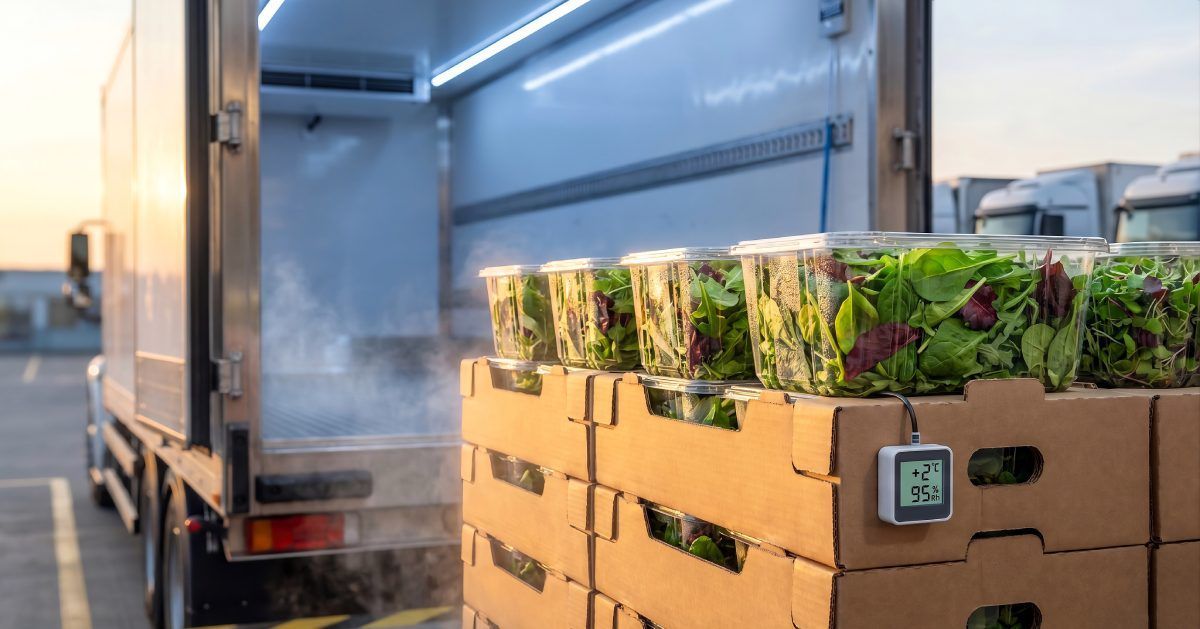
Temperature logs without real-time tracking leave gaps in the process. And modern reefer freight requires active alerts and check-ins to catch issues before the product spoils.
How EFS Reefer Freight Protected Product Quality for a Food Manufacturer
Take a midsized dairy processor that is losing up to 8% of outbound volume to spoilage and returns. Temperature reports showed trailers dipping above safe levels during transit, but no one could prove where or when the damage occurred. Upon partnering with EFS for refrigerated freight solutions, three operational changes transformed the entire product:
- Trailers were precooled before arrival and verified at the dock.
- Sensors tracked real-time temperature inside each trailer, with alerts routed to dispatch if there was any drift.
- Route timing was adjusted to reduce long dwell times at delivery sites.
Within two months, product loss dropped from 8% to under 1.5%. And the shelf life at retail improved. Buyers also stopped reporting soft product complaints. The manufacturer reduced the number of rejected loads and stopped spending thousands each week on reshipments.
When Refrigerated Freight Solutions Matter Most
EFS supports cold chain integrity for temperature-sensitive freight in these critical categories:
- Dairy products (tight temperature range, high spoil risk).
- Frozen meat and seafood (strict below-zero requirements).
- Fresh produce and herbs (high airflow sensitivity).
- Time-sensitive retail promotions (fixed shelf-life windows).
- Food service distribution with multi-drop schedules.
The tighter the margin for error, the more valuable the
reefer system.
Why EFS Is Built for Food-Grade Refrigerated Freight
At Entourage Freight Solutions, we build refrigerated freight programs around what the product actually needs to survive the journey intact. That entails:
- Precooling, trailer checks, and dock-level temperature protocols.
- Regional, national, and last-mile refrigerated freight coverage.
- Time-specific delivery coordination to prevent spoilage risk.
- Monitoring tools to back every move with data.
Food quality survives through planning, execution, and control. That is why EFS refrigerated freight solutions are built on discipline. When you control temperature, route, and timing, it becomes much easier to control quality. EFS helps food manufacturers protect their products, reputation, and profits — by delivering freshness rather than just freight.
Contact EFS today to get started