How Reefer LTL Solves Cold Chain Challenges for Food Manufacturers
Blog Post CTA
Refrigerated LTL shipping is often the only option for small and midsize food manufacturers that don’t ship enough to fill a full trailer or send goods to multiple destinations. But this is the mode where cold chain failures occur most often. With reefer LTL, the trailer door is opened at every stop, letting outside air rush in and putting all the perishables inside at risk.
But reefer LTL solutions that work well can maintain stable temperatures across multiple stops and keep freight costs low. This article tells the story of how one food company solved its biggest
refrigerated freight challenges by partnering with Entourage Freight Solutions.
Cold Chain Challenges Food Manufacturers Face
Every minute of temperature exposure matters. Here is why:
Temperature Excursions and Spoilage
According to Avery Dennison’s 2026 report, the global supply chain will lose $540 billion in economic value due to food waste this year. The same report states that 61% of businesses lack full visibility into where food waste occurs. Unfortunately, that lack of visibility often shows up as temperature changes that go unnoticed until a customer makes a claim.
FSMA and Regulatory Compliance
The FDA’s Food Safety Modernization Act requires shippers, carriers, and receivers to follow written rules for clean transportation. These strict rules apply to anyone transporting food by motor vehicle, and it’s the shipper’s responsibility to ensure safety standards are met. So if your carrier doesn’t meet those standards and you don’t have records to prove it did, the liability falls to you.
Cost Pressure from Underused Reefer Capacity
Midsize food manufacturers often don’t produce enough to fill a whole reefer trailer on every run. So they book a full truckload instead of reefer LTL because they don’t think the latter can maintain a stable temperature. However, that means they pay for an entire refrigerated trailer, even though the shipment only fills half of it. That wasted space adds up quickly.
Multi-Stop Temperature Exposure
Making multiple deliveries on the same reefer run could impact the temperature. That is because when the door swings open at each location, outside air enters the trailer, briefly raising the inside temperature. Cumulative exposure can increase the risk of spoilage before the food reaches its final destination.
The Food Manufacturer That Struggled With Cold Chain Gaps
The manufacturer in this case was a midsize producer of frozen and refrigerated prepared meals. Prior to EFS, it leveraged a mix of carriers to ship 15 to 20 LTL loads a week that required maintaining a specific temperature. However, temperature tracking was inconsistent.
In just one quarter, the manufacturer had seen several spoilage claims. Two retail customers raised concerns about temperature compliance during receiving inspections. And shipping costs were rising because the logistics team kept booking FTL reefer carriers instead of finding a reliable LTL option.
How EFS’ Reefer LTL Solutions Handled the Challenge
To address the manufacturer’s cold-chain problems, EFS layered several changes that worked together. Here is how we went about doing that:
1. Continuous Temperature Monitoring
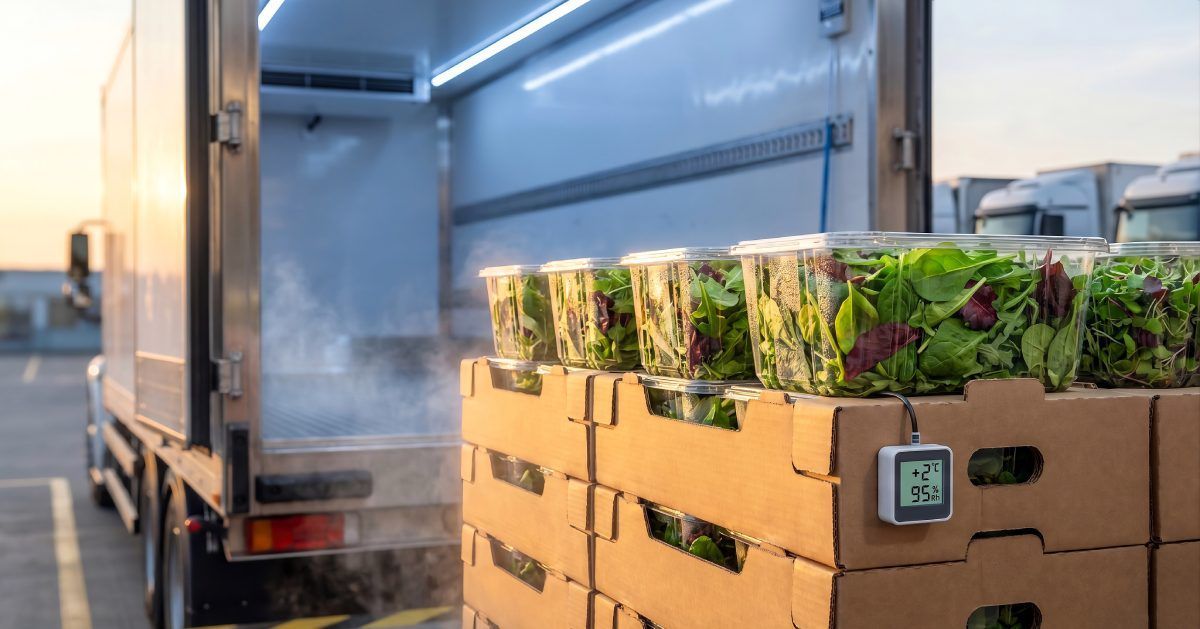
EFS tracked the temperature of every reefer LTL shipment in real time. This way, the manufacturer had documented proof that each load met the cold chain requirements. It also ensured the team saw exactly when, where, and how long a temperature change occurred, if it did. That visibility closed the gap that had been causing spoilage claims and FSMA documentation failures.
2. Carrier Vetting for Food-Grade Standards
EFS leveraged vetted carriers with food-grade certifications, clean inspection records, and experience handling multi-temp loads. Before being added to the rotation, every carrier had to meet the FDA’s standards for safe transportation. This made it less likely that loads would be mixed up, and easier to use the same carrier for all shipments.
3. Rightsizing Shipments to Cut Waste
EFS sorted the manufacturer’s shipments by destination region and temperature zone (frozen and refrigerated), then combined them into properly loaded reefer LTL runs. This was huge because that meant the manufacturer stopped paying for empty trailer space.
4. Multi-Stop Coordination With Temperature Safeguards
EFS planned delivery routes so that the door stayed open for as little time as possible at each stop. Deliveries with the highest risk were loaded last and unloaded first, which reduced cumulative temperature exposure across multi-stop runs and kept the remaining freight within safe temperature bands
Cheaper and Efficient Reefer LTL Shipments With EFS
Entourage Freight Solutions is a partner with experience in the foodservice industry. We know the difference between a grocery DC delivery window, a foodservice distributor drop, and a retail receiving dock that has strict temperature audit requirements. This allows you to ship smarter, save money, and keep every load at the right temperature from the dock to delivery.
Contact us today to get started.