Understanding LTL Freight Classes and Why They Matter
Blog Post CTA
The body content of your post goes here. To edit this text, click on it and delete this default text and start typing your own or paste your own from a different source.When asked for their freight class number, shippers often pick the wrong one from their bill of lading. Sometimes they copy the code from their last BOL or estimate density using a forklift gauge instead of a calibrated scale. Four to six weeks later, they are hit with a reclassification fee and an adjusted invoice that runs 20% to 35% higher than the original quote. This article provides an easy-to-understand explanation of LTL freight classes, including their impact on pricing and handling.
What is Freight Class?
The National Motor Freight Classification system assigns a class from 50 to 500 to each LTL shipment. Class 50 freight is dense, durable, and cheap to move, like a pallet of steel fittings at 48 pounds per cubic foot. Class 500 is the opposite, fragile and expensive. A typical example is a shipment of ping-pong balls or gold-framed artwork.
For decades, the class was dictated by density, handling, stowability, and liability. But in July 2025, the NMFTA’s Docket 2025-1 shifted the classification to a density-first model, consolidating some 2,000 commodity listings into a 13-sub density scale and adding two new classes at the bottom (Class 50 and Class 55). Then in February 2026, more legacy items were canceled in Docket 2026-1.
Density is now the class in most LTL freight classes, and if your shipping software is still pulling codes from a commodity table used before July 2025, it may be quoting against defunct NMFC items. The old system had its problems (too many exceptions and too much room for creative interpretation), but people knew it. Although this new one is cleaner on paper, the enforcement still bites.
How Class Hits Your Invoice
The class establishes the base rate per hundred pounds, but the differences between classes are not small. For instance, a small pallet sent between two cities can cost $400 at one freight class or $1,400 at another. Packizon’s analysis shows that reclassifying a shipment from Class 100 to Class 125 generally results in a 20% to 35% increase in rates for the same physical freight.
The carrier puts your freight through a dimensioner at the terminal. If the NMFC code, weight, or dimensions declared don’t match what’s on the pallet, they re-rate at the corrected class and tack on a fee, usually $50 to $150. You receive the amended invoice two to six weeks after delivery, by which point you have no way of checking what the dimensioner actually measured.
Now, consider a midsize distributor shipping 200 LTL pallets a year. Its product is lightweight but bulky. It figures out to Class 175. But the distributor has been booking it under Class 100 because that’s the code in the old system. Reclass fees are probably $120 each. That’s $24,000 in unnecessary fees for a whole year before accounting for the rate difference between the two classes.
How Class Affects Handling
Under the new system, handling, stowability, and liability still count, but they do not drive the classification as much.
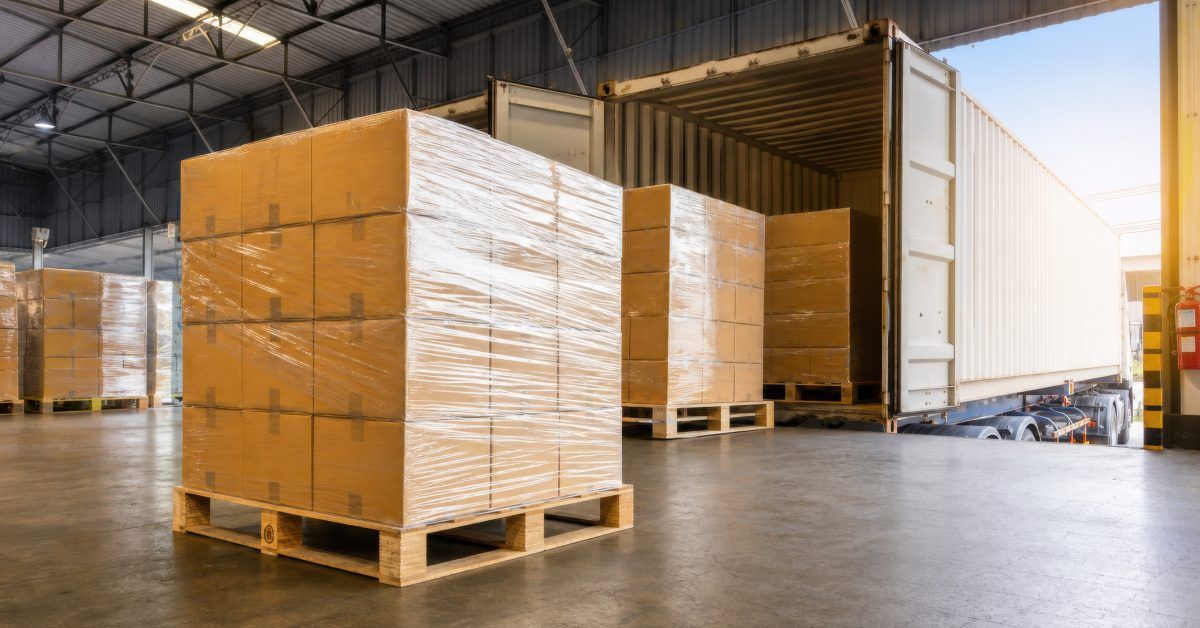
Because it is lighter, higher-class freight is usually more difficult to stack and more likely to shift during loading and unloading across an LTL network. At each terminal, workers arrange pallets around other shippers’ cargo, so if your pallet overhangs the base or isn’t shrink-wrapped, a carrier may reclassify it based on handling rather than density. There are all sorts of rules for perishable and hazmat freight that are completely outside the density model.
However, the fewer times your freight changes hands at terminals, the less exposure you have to both damage and reclassification. A shipment with four handling points has four chances to get flagged. One with two has two.
Getting Your Class Right Before It Costs You
- Make sure all pallets are weighed and measured on a calibrated scale.
- Before booking each shipment, check the density (weight divided by cubic feet) and the current NMFC code.
- If you changed packaging or pallet configuration, then your previous classification likely no longer applies.
- Check with your carrier or 3PL to see if they re-rated your top SKUs against the July 2025 density scale; you can start there if no one is sure.
How EFS Gets the Classification Right
With over 4,500 dry freight carriers and more than 3,500 temperature-controlled carriers at Entourage Freight Solutions, classification accuracy matters across our entire network. With our 24/7 operations, EFS can catch reclass flags before they become invoice surprises. The goal is a quote that holds through delivery, starting with the right LTL freight classes at tender. Contact us today to get started.